
Special Elements
Ultimate Fighters Are Considered Ultimate Athletes : What is the Ultimate MMA Diet!?

As the sport of Ultimate Fighting, otherwise known as Mixed Martial Arts or MMA for short, grows in popularity, many sports enthusiasts have described the fighters as ultimate athletes. A sport where players take more risks and get put to more demanding tests than other athletes in other sports. This kind of ultimate performance should have a more robust diet then too. Let’s check out what could be some of the best MMA diet information ever constructed.
Just so happens we can tell you the ultimate diet, that no one quite has sited in yet. Also, the ultimate fitness & nutrition coaching that you need.
Here is a fun one for you, we asked the A.I. to build us the ultimate diet for a UFC fighter.
Here is what it gave us:
Designing a diet plan for a UFC fighter requires careful consideration of their training intensity, weight class goals, and individual needs. Here’s a sample diet plan that can serve as a starting point. However, it’s important for the fighter to consult with a sports nutritionist or dietitian to tailor the plan to their specific requirements.
Note: This sample diet plan assumes the fighter is in a training camp and has a moderate to high training volume.

Meal 1 – Breakfast:
- Oatmeal with mixed berries, nuts, and a scoop of protein powder.
- Whole-grain toast with avocado.
- Scrambled eggs with spinach and bell peppers.
- Freshly squeezed orange juice or water.
Meal 2 – Mid-Morning Snack:
- Greek yogurt with honey and sliced bananas.
- Handful of almonds or mixed nuts.
Meal 3 – Lunch:
- Grilled chicken breast or lean turkey.
- Quinoa or brown rice.
- Steamed vegetables (broccoli, carrots, asparagus).
- Side salad with mixed greens and olive oil vinaigrette.
Meal 4 – Afternoon Snack:
- Rice cakes with almond butter.
- Carrot and celery sticks with hummus.
Meal 5 – Pre-Training:
- Grilled fish (salmon, tuna) or lean beef.
- Sweet potatoes or whole-grain pasta.
- Steamed or grilled mixed vegetables.
- A small serving of fruit (apple, pear).
Meal 6 – Post-Training:
- Whey protein shake with water.
- Banana or other easily digestible carbohydrate source.
Meal 7 – Dinner:
- Lean protein source (chicken, turkey, fish) or plant-based protein.
- Quinoa or brown rice.
- Steamed or sautéed vegetables.
- Mixed salad with a variety of colorful veggies.
Meal 8 – Evening Snack:
- Cottage cheese with mixed berries.
- Herbal tea or water.
Important Nutritional Considerations:
- Hydration: Stay hydrated throughout the day by drinking water regularly.
- Protein: Ensure sufficient protein intake to support muscle recovery and growth.
- Carbohydrates: Include complex carbohydrates to fuel training sessions and replenish glycogen stores.
- Fats: Incorporate healthy fats from sources like avocados, nuts, seeds, and olive oil.
- Vitamins and Minerals: Eat a variety of colorful fruits and vegetables for essential vitamins and minerals.
- Timing: Consume a balanced meal containing protein and carbohydrates before and after training.
- Weight Management: If cutting weight for a specific class, consult with a nutritionist to create a safe and effective weight-cutting strategy.
Remember, every fighter’s body is different, so it’s crucial to adjust the plan based on individual preferences, training intensity, and dietary requirements. Regular monitoring and adjustments, preferably with the guidance of a professional, are essential for optimal performance and health.
The extreme performance and extreme nutritional need make it very interesting for a nutritional botanist concerned with athletics such as myself to look at these fighters’ diets. Over the course of this year, I have taken an in-depth look at two of the ‘ultimate, MMA guys,’ their diets, and their hired nutritionists. I have also discussed how the Nutritional Diversity diet can help establish a baseline guarantee of nutritional coverage for any athlete and any fighter.
I can talk about MMA cause I have done it my whole life, on the pavement too many times for free! I am born and raised in Albuquerque – to the bone -, and I am personally coming out of the most victorious MMA camp in the world.
I can talk about diet cause I work currently in Panama on the cutting edge diet today in the world.
Remember that without enough water, your performance, your results, and your technique will not improve!
Us real people we like to hear from people who do it and not just say it. I prefer someone who says nothing and does their work dependably over all other types. Speaking of too much gab – let’s get to it.
Finding the Ultimate MMA Diet is not so easy…
What is the best MMA diet to have behind you to support killer MMA training? What would it take diet-wise to step training to a new level?
MMA fighters suffer serious injuries regularly, and they need to have all the bases covered. If what they say about your nutrition being the largest part of your success and performance is true, what exact nutrition plan will I employ?
The fight is won or lost far away from witnesses – behind the lines, in the gym, and out there on the road, long before I dance under those lights. -Muhhamed Ali
Whether or not you are an MMA fan, you have to admit a Mixed Martial Arts Fighter is a tested athlete who must be dexterous, and well rounded on stamina and strength, well engaged in mindful focus, that must be fast and able to switch gears and rhythms on the flash.
His or her joints and bones need lots of support both nutritionally and conditionally to take that kind of beating they take in the ring or octagon.
A fighters mind needs to be firing on all pins to see and defend the diverse set of attacks that could be coming at them.
Fighter Diet
Clearly, when it comes to the pro’s and doing things right in this MMA sport, the MMA diet nutrition has to be a science. Many nutritionists, trainers, and athletes claim food is the biggest part of the equation contributing to the final performance.
This science of biology and food conversion is ultimately a science of love, and of how to take optimal care of ourselves. To start, I want to take a look at what I can find out about what these top MMA guys out there today eat for their MMA diet, and see about getting together the beginnings of an Ultimate MMA Diet plan that could even improve existing performance all on its own. This is what the ND biodiverse food study is all about.
John Jones & Loutrition Diet
John Jones, two-time undefeated Light Heavyweight Champion of the UFC with 22 wins, 9 by knockout, 6 by submission, and one loss by disqualification, has been considered by many the greatest MMA fighter of all time (GOAT). John Jones trains at the Greg Jackson-Wink Academy in Albuquerque now and since 2012, and is originally from New York.
I am big Jones fan cause he is the best and he is the smartest and he knows to train on my team. 😉
According to Play it on Point, this is a diet example for Johnny ‘Bones’ Jones. He mentions the use of black rice in his interview, and other ingredients on occasion, of course, not listed below.
Breakfast: 2.5 fl. oz low-fat, plain kefir 0.5 oz (medium) banana 1/2 tbsp peanut butter 1.5 oz oatmeal
Lunch: 21.4 oz water 2.5 oz ground turkey breast – no skin 4.5 eggs – egg whites 2.5 cups spinach 9.5 oz pineapple (9.5 oz) 1/2 tbsp olive oil
Snack Meal: 21 oz water 2.5 oz low-fat, plain Greek yogurt 1/2 cup grapes 3 Brazil nuts
Dinner: 21 oz water 5.5 oz tilapia 1/2 medium lemon 2.5 cups collard greens 2 medium tomatoes 1/2 tbsp olive oil
In one quick video for MMA TV in November of 2015, John sat down to eat a “5x, in 2 weeks meal” of, oatmeal, whole-grain toast, potatoes, blueberries, an omelet, and 2 grilled chicken breasts from the Albuquerque restaurant Flying Star. Interesting to me that three starch and grain foods are eaten together in this portion of his MMA diet.
I don’t know how credible a source or how current the information is above but John Jones told USA Today in April 2016 that he now adheres to the tutelage of nutritionist Louis Giordano, in a highly intelligent well-informed system, a carbohydrate-based diet, where even cake can be eaten, if it is in the correct balance with other foods. He mentions in the article that he realized how wrong he had been eating, and made lots of corrections.
I myself have lost respect, and become disappointed in the UFC, and the U.S. sports commissions being that the king in the game was obviously set up, and a deserved career and deserving fans are all robbed such incredible possibilities. I know being a guy from Jackson’s camp, the likely hood of him knowingly being involved with illegal enhancement substances is so very close to, if not is; no chance.
Good to see Jones back in the cage now, putting down his opponents like the tune never skipped a beat.
Lou Giordano, also known as ‘Loutrition,’ who has worked with several Legendary Fighters such as Dan Henderson, BJ Penn, and Andrei Arlovski, is a major proponent against the dreaded ‘weight cut,’ where a fighter will dehydrate himself to lose ten pounds(or more), and then eat like a goat to try to come back to 100% for the fight. Johnny Hendrix fell places from the title shot he could almost smell, taken out before entering the ring ever, to the hospital from his weight cut, and then hired Giordano also.
Titan FC Fighter Jose Torres, another client of Giordano’s tells Cage Pages that he photographs each meal, and sends notes on his weight and workout, how he felt and other data to the nutrition guru, who would work out his next day that night, keeping a daily balance managed so the fighter stays on point. The guru seems to be a fan of 5 to 6 meals a day.

Adam Krzymowski Pencil
GSP & Dr. Berardi
George Saint Pierre or GSP for short is another one who is arguably the pound-for-pound greatest of all time. The French-speaking Quebecer, pioneered his MMA career from loved developed from martial arts movies, in a place where not many martial arts were available in the school setting.
GSP holds a mixed martial arts record of 26 wins with 8 knockouts, and 6 submissions, two losses and is the former Welterweight and Middleweight Champion of the UFC.
In 2009 just after defending his title against BJ Penn, GSP hired Dr. John Berardi who is the creator of the Surge recovery product, and the Precision Nutrition team, a fitness software creator and coaching program, which caters heavily to nutritionists and coaches. Dr. Berardi found and recruited two chefs in the area to the team, preparing stuff that looks like this:
– 1 lower carb anytime meal to be eaten whenever you like: 650 calories – 60g protein, 40g carbs, 30g fat
– 1 lower carb anytime meal o be eaten whenever you like: 650 calories – 60g protein, 40g carbs, 30g fat
– 1 high-carb post-exercise meal to be eaten immediately after training (a recipe that can be eaten cold): 700 calories – 60g protein, 100g carbs, 10g fat
“Georges’ baseline menu is about 3200-3500kcal per day, with around 250 grams of protein, 350 grams of carbs, and 100 grams of fat. Post-workout meals are higher in protein and carbs, while being lower in fat, and eaten right after workouts. Evening meals are higher in protein and fat while being low in carbs.”
In the Case of GSP research was easy, and these guys have been very forthcoming with their diet supplements planning. Traditional meal ingredients that are organic are employed to achieve the baseline goals, and are supplemented by 2 Shakes (per day): 1 shake at a time, between meals, mixed with almond milk or water 4 fish oil capsules 1 scoop milk-based protein powder 1 scoop greens supplement 1 cup frozen mixed berries; (282 calories – 18g protein, 25g carbs, 12g fa)t. Before training: ½ protein bar Immediately after training: 1 Surge Recovery drink (330 calories – 25g protein, 44g carbs, 1g fa)t. Followed by a post-workout meal 1 hour later.
Brands are Muscle Milk protein powder from CytoSport, Greens+ from Genuine Health, Flameout fish oil capsules from Biotest. Finbar from Biotest: 125 calories – 7g protein, 20g carbs, 4g fat, Surge Workout Fuel from Biotest: 85 calories – 8g protein, 21g carbs, 0 fat
Approximate Total Baseline Intake: 3104 calories – 256g protein (30%), 315 carbs (40%), 99g fat (30%), and GSP is my size (170-200) so this was cool to see.
Stay tuned for a part two and three, of looking for the best MMA diets.
Just for Fun

We do Ju Jitsu so are figuring out the supportive wonder foods…Just for fun
Not knock to Loutrition, or this diet, if this is even still or ever was it (*references below_).. I am telling ya too that I write this with your eyes and mind in the forefront, I would design a much different thing in person, but many of the names of ingredients are unknown outside of very technical references. In other words I am writing a simple “just for fun,” and for an initial abstract formulation of a serious diet plan down the road for this.
See more about the Panama study where we actually do this here.
(contains meat*)
Breakfast: 2.5 fl. oz low-fat, plain kefir 0.5 oz (medium) banana 1/2 tbsp peanut butter 1.5 oz oatmeal.
I allways wonder if athletes tell it all in interviews
. I am sure they don’t share their best secrets. This is what I might think up for a super diet EXAMPLE and slowly try to refine:
All Central American Permaculture & wild foods: 1 plantain, 2 leaves culantro, 6 leaves wild zornia, 2 ounces of fresh jackfruit, 4 mangosteen fruit, 1/2 ounce baked vegetable state breadfruit, shredded carrot, and homegrown tomato as a salad. 1/4 ounce ambrosia Peruvianna a.k.a. American ragweed blended with : 1/2 mango fruit and 1 leaf, 1/4 avocado and 1 leaf, 3 leaves cranberry hibiscus, 3 leaves pogonia, 6 leaves mugwort, 2 leaves hogweed, 1 Eugenes Victoriana fruit, 1 starfruit, coconut water, and turkey tail mushroom. Large mustard leaf and one large kail or turmeric leaf used to role: 1/16 ounce of each lovage leaf, parsley head, and stem, mini shoots wild, gotu kola, and wild clover.
I would alternate this with intermittent fasting sometimes. One day this big breakfast next day intermittent fast. Revving up for a big breakfast in the morning will enhance the effects of the fast.
Lunch: 21.4 oz water 2.5 oz ground turkey breast – no skin 4.5 eggs – egg whites 2.5 cups spinach 9.5 oz pineapple (9.5 oz) 1/2 tbsp olive oil
This is quite a good lunch, and since he has been on it we might as well keep it in place as there is a small adjustment and getting used to sufficient full spectrum Nutritional Diversity diet plans. A couple of things to note are, that pineapples have been worked over, and harshly augmented in many cases – its crucial to get a homegrown pineapple of a more original strain. They are almost always monoculture crops. Also, this has happened to the common “Chiquita” banana.
Snack Meal: 21 oz water 2.5 oz low-fat, plain Greek yogurt 1/2 cup grapes 3 Brazil nuts
Might consider consuming the water at a different time than the food. Might also look at goat cheese, or milk as an alternative to the cow. Or being this is snack meal, throw all that in the blender with coconut and the water from it, a few other nuts, at least 7 different greens, a
20 species of plant leaf, mango and pineapple fruit
few flowers and maybe some cacao or jackfruit.
Dinner: 21 oz water 5.5 oz tilapia 1/2 medium lemon 2.5 cups collard greens 2 medium tomatoes 1/2 tbsp olive oil
Diner pretty good too, again there is a water intake toggle that can be honed, in order to somewhat throttle digestion. It is an important tool, especially for athletes. If the tilapia had a nutritionally diverse diet it’s a better fish. Also, most are blown away at how delicious a rich mix of functionally nutritious wild and select other greens can be. Cooked greens should be at least 50% of a good diet. In a diversity of more than 60, and 10% of it all fresh as appetizer and vitality system activator you have yourself a revolutionary diet in modern times.

Notes on future study
It’s a sweet daydream of mine, behind the shovel when my mind wanders off, with this “food art,” to work with some pro martial artists, and I wholeheartedly believe any athlete who comes here to the tropics and fully incorporates the complete findings of this biodiverse food study, is bound to have similar results as the 300+ we have observed over the last few years.
The Ultimate MMA Fighters’ & Diet Arts
Thinking in a no-limits fashion, with no vilification of any foods, but with the goal of having a calculated and well-budgeted ingredients list, organized by time of the meal, training sessions, and rest sessions; my thoughts on the diet, and the information and diet plans I am able to find, feel too loose. I find food combinations that I know to fight with each other in my MMA diet research, I find coffee mentioned frequently, I find a lot of repeat information, and seldom anything new. I feel there is too much comfort in modern society with the diet that we called traditional and balanced.
I do feel that diet plans are based on exercise and rest plans, which for an athlete comes first, then the diet should be made up accordingly. Plus with my nutritional diversity knowledge and experience, I wonder how many of these fighters and nutritionists are really getting to know their foods, or are their minds and bodies are constrained to the textbooks, and other modern recommendations that are mostly all inadequate or non-optimal for actual use and competitive application. Some people I am sure would say I am over-complicating things, and the modern balanced diet, and simply eating clean is all you need to focus on. I would say there is a lot that guy does not know.
Clearly today in the modern age we know that humans can live off of absolute garbage almost. We are amazing creatures. That kind of eating takes its toll and has a price, and eating the right way, if we know what that is complete, would in this same completeness produce benefits.
“To eat is a necessity, but to eat intelligently is an art.”
― François de La Rochefoucauld
The art of eating, as a large puzzle piece to the art of fighting, has new horizons in this age of worldwide market availability.
We live in the perfect age to figure it all out. Now is the time! The ultimate mixed martial arts diet intelligence has not yet been fully painted.
I would not begin to think I could just draw it up in this article, but I do want to do is inspire and motivate, the continual formulation of it. Also, we are trying to grow a qualified team, if you have more interest in working with on this diet, enroll in a certification track.
I am working with a good team of guys here on the biodiverse food study in Panama, and we are concentrated heavily on diet study and what works best.
To give some basic questions for MMA fighters to chime in on:
- How many times a day do you eat and how far apart are those increments?
- How do you measure your calculated meal increments?
- Can you list what you may eat in a weak as far as a sum total foods, to include the separate species of, or sources of foods?
- Are you familiar with the chemical glyphosate? (honestly, before you looked it up, did you know?)
- Are you running on carbohydrates or fats?
- How many hours per day do you train heavily? Maybe even describe the workout.
- What bone breaks have you experienced? Other injuries?
- What kinds of benefits do you imagine you could get from widening the spectrum of nutrition that you ingest? What is the spectrum of species now? List them.
I myself started a log of my own MMA training and MMA diet adventures, a diet and fitness diary with pics, and all the important data, including blood-work, and basic vitals. I started training MMA again this past January (2018) motivated by finding some videos online of kiddo I care about smashing on the mat! I was so overjoyed I had to go roll it out.
Being that I am always on the road these days, I am trying to take some heavy looks at some good, new, diverse, performance supplements too.
Good luck with your training!
Your gym-mate and humble student of MMA & nutrition
The number one thing that would address with supplementation is electrolytes and hydration. Also a good oil.
So for today’s ranking we looked at the best hydrational supplements to have handy in the gym bag.
Let’s Check out the Best MMA Diet Rankings.
MMA DIET RANKINGS
MMA DIET BENEFITS
Implementation of a 14-week training program resulted in advantageous changes in participants’ body composition, as well as improvement in the upper limb anaerobic peak power and aerobic fitness of the MMA athletes. [1]
Mental and facial language is learned at a whole new level inside the build-to and face-off times in the ring. [2]
MMA DIET SIDE EFFECTS
MMA fighters experience possibly the worst of all injuries in combat sports. [x]
Weight cutting concerns have been evaluated to cause serious injury and kidney damage. [x,x,x]
Water diversity, dynamics and proper salt intake can really help with this.
MMA DIET EXPERIENCE
We do this.
MMA DIET DISCUSSION
The number one thing is hydration today. The modern diet does lack protein and calcium and al everything really but people are answering to that with the best performance supplements man has ever had.
At the end of the day NDdiet formulas are going to be the best performance diet and best MMA diet.
MMA DIET FAQ
Q. What nutrient groups should I focus on the most?
A. To start calcium, bone, and joint stuff, then move into hydrational elements, making sure you have a diverse amount of good well-sourced waters coming in, electro lights and amino acids, make sure you are getting sufficient nutrition.
I recommend next a protein and a glutamine supplement and or nutritional focus. See the proper way to take supplements.
Next, I really recommend the best focus supplement or even better all-natural permaculture-based nutritional plan.
Q. Where can I find this “permaculture?”
A. You may not have heard the term but its a big one. Look it up I am sure there is one in your area, if not far away. Inherently these permanent -culture installations are some of the happiest, most balanced most willing to get their produce-to-you people ever. They likely can also grow on request.
Do you really like how this sounds? You can be the nutritional DJ for your gym, make a little money and have the best full-coverage nutrition around you. All you need is the permaculturist(s).
Q. What is the best grocery store stuff I can get now and make the best MMA diet with that?
Q. What kinds of things would make the best MMA diet better?
A. Great question. Kombucha is one thing that would make the best MMA diet better by enhancing the nutrient uptake from the existing diet plan and maybe even allowing for the expansion of it.
The best hydrational supplements really do help, they also keep the immune system running well and hydration is vital to life, performance, and recovery. Whatever is not sufficiently hydrated will not perform, it will age, it may die and you will not get the results you want. This goes from the cellular to the whole muscle to the whole body.
MMA training is some of the hardest training which means heavy depletion.
MMA DIET RECAP
Expend a lot, eat a lot, rest a lot, HYDRATE.
Build your NDdiet.
MMA DIET RELATED MATERIAL
[et_bloom_locked optin_id=optin_4][/et_bloom_locked]
Additional References,
Media References Pages:
- abqjournal.com/440117/duke-city-a-dominant-force-in-mma.html
- usatoday.com/story/sports/ufc/2016/04/22/jon-jones-ovince-saint-preux-ufc-197-weigh-in/83414838/
- piop.net/jon-jones-diet/
- en.wikipedia.org/wiki/Jon_Jones
- mmafighting.com/2016/1/26/9834136/johny-hendricks-hires-nutritionist-vows-to-improve-weight-cut-ive
- tim.blog/2013/01/27/eating-with-ufc-champion-georges-st-pierre-the-diet-he-used-to-transform-himself-2/
- cagepages.com/2016/03/04/titan-fc-37-jose-torres-using-loutrition-for-weight-cut/
- businessinsider.com/ufc-boss-dana-white-expects-jon-jones-to-fight-this-year-2018-1
Originally Published, Jan 17, 2018 @ 14:32 Updated 2/21/2019, 06/10/2019, 02/26/2020 Apr 16, 2020, Aug 15, 2023


Few plants are as disliked — or as misunderstood — as ragweed. To most people it’s simply the reason late summer means itchy eyes and endless sneezing. But ragweed is also a native North American plant with a genuinely surprising past: it was one of the continent’s ancient cultivated seed crops, and its very name is tangled up with wormwood in a way worth untangling.
What ragweed is (and the wormwood mix-up)
Ragweed is the genus Ambrosia — most commonly Ambrosia artemisiifolia (common ragweed) and Ambrosia trifida (giant ragweed) — in the daisy family. Here’s the confusion we see constantly: common ragweed’s folk names actually include “American wormwood” and “bitterweed,” which is why people so often conflate it with true wormwood. They are not the same plant. True wormwood is Artemisia absinthium; ragweed is Ambrosia. Different genus, different chemistry, different story — even if an old common name blurred the line.
The allergy reality
There’s no sugar-coating ragweed’s headline trait: it is one of the most significant pollen allergens in North America. A single plant can release enormous quantities of lightweight pollen that travels for miles on the wind, and its late-summer-into-fall season is the classic cause of seasonal allergic rhinitis — hay fever. People allergic to ragweed may also react to related plants and, through cross-reactivity, to certain foods like melon and banana in some cases.
The forgotten history: an ancient seed crop
Here’s the part almost no one knows. Long before it was a villain, giant ragweed (Ambrosia trifida) was part of the “Eastern Agricultural Complex” — a group of plants that Indigenous peoples of eastern North America cultivated thousands of years ago. Archaeological evidence shows ragweed seeds among early cultivated foods, valued as an oily, protein-bearing seed before maize came to dominate. It’s a striking reminder that our labels — “weed,” “crop,” “medicine,” “menace” — say as much about us as about the plant.
One plant, four names, and a history that runs from ancient granary to modern nuisance — ragweed is a lesson in how much context decides a plant’s reputation.
From the field — what we’ve seen
Fifteen years of working the land teaches you to read plants the way the old growers did — not as heroes or villains, but as parts of a system. Ragweed is a pioneer: it rushes into bare, disturbed, abused soil, and where you see a lot of it, the ground is often telling you something about how it’s been treated. That ecological literacy — knowing what a plant’s presence means — is field knowledge that rarely makes it into a nutrition table. We document ragweed here for exactly that reason: to know a plant honestly, allergen and ancient food alike, is part of a truly diverse understanding of the living world.
Supporting study & further reading
- Native Plant Trust, Go Botany. “Ambrosia artemisiifolia (common ragweed)” and “Ambrosia trifida (giant ragweed).”
- North Carolina Extension Gardener Plant Toolbox. “Ambrosia artemisiifolia (American Wormwood, Common Ragweed).”
- Smith BD. “The Eastern Agricultural Complex” — archaeological literature on early cultivated seed crops of eastern North America.
Part of the natural-food studies at Nutritional Diversity. Explore the wider system at nutritionaldiversity.com/ecosystem.
Bromelain: Pineapple’s Powerful Enzyme
Bromelain is a group of enzymes found in the stem and fruit of the pineapple (Ananas comosus). More than a tropical treat, pineapple carries one of nature’s most studied digestive enzymes.
Nutritional & Phytochemical Profile
Bromelain is a proteolytic enzyme, meaning it helps break down proteins. It is concentrated in the pineapple core and stem and is often extracted for use on its own, alongside the fruit’s vitamin C and manganese.
Traditional & Modern Uses
Traditionally, pineapple has been eaten to aid digestion after protein-rich meals. Bromelain is now widely used to support digestion, a healthy inflammatory response, and post-exercise recovery as part of a balanced routine.
How to Use & Enjoy
Fresh, ripe pineapple — especially closer to the core — provides natural bromelain; note that cooking deactivates the enzyme, so raw fruit is best. Concentrated bromelain is also available in supplement form.
The Nutritional Diversity Perspective
Bromelain highlights the role of food enzymes in nutrition — an often-overlooked dimension of dietary diversity that whole, raw foods uniquely provide.
These statements have not been evaluated by the Food and Drug Administration. This content is for general educational purposes and is not medical advice. Consult a qualified healthcare provider before use, especially if pregnant, nursing, taking medication, or managing a health condition.
Yohimbe: The Potent West African Bark
Yohimbe (Pausinystalia johimbe) is an evergreen tree native to Central and West Africa whose bark has a long history of traditional use. It is one of the more potent botanicals and deserves respectful, informed use.
Nutritional & Phytochemical Profile
Yohimbe bark contains the alkaloid yohimbine along with related compounds. Because these alkaloids are pharmacologically active, yohimbe is far more potent than most culinary botanicals, and its content can vary widely between products.
Traditional & Modern Uses
Traditionally, yohimbe bark has been used in West African practice as a stimulant and tonic. Modern use should be cautious: yohimbe can raise heart rate and blood pressure and is not suitable for everyone — particularly those with cardiovascular conditions, high blood pressure, anxiety, or who are pregnant or nursing.
How to Use & Enjoy
Because of its potency and variability, yohimbe should only be used under the guidance of a knowledgeable healthcare provider who can advise on whether it is appropriate and at what dose. It is not a casual daily botanical.
The Nutritional Diversity Perspective
Yohimbe is included here for education and completeness. It is a clear reminder that “natural” does not mean “gentle” — some botanicals are powerful and call for informed, careful respect.
These statements have not been evaluated by the Food and Drug Administration. This content is for general educational purposes and is not medical advice. Consult a qualified healthcare provider before use, especially if pregnant, nursing, taking medication, or managing a health condition.
-

 Agriculture6 months ago
Why Small Alternative Tropical Agriculture is the Best Investment Today
-

 Special Elements4 months ago
Garlic Vine (Ajos Sacha / Mansoa alliacea): The Amazon’s Garlic-Scented Plant
-

 Special Elements6 months ago
Best Pre-Workout Supplement Rankings, Benefits, Side Effects & Experience
-
 Special Elements4 months ago
Cassava (Manioc): Nutrition, Energy & Safe Preparation
-
 Special Elements6 months ago
Best Glutamine Rankings, Benefits, Side Effects & Experience
-
 Special Elements4 months ago
Wormwood (Artemisia absinthium): The Bitter Herb — Traditional Uses & Real Cautions
-
 Special Elements4 months ago
Culantro (Eryngium foetidum): The Bold Tropical Cousin of Cilantro
-
 Special Elements3 months ago
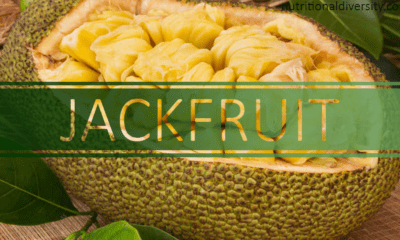
Jackfruit: Nutrition, Fiber & the Tropical Meat Alternative