
Special Elements
Best Serrapeptase Rankings, Benefits, Side Effects & Experience

Silkworms produce a chemical known as serrapeptase or sometimes serratiopeptidase. This compound has been used as a drug for various ailments in numerous parts of the world, especially Japan and Europe.
Many nutritionists and food experts presently classify serrapeptase as a dietary supplement, and it would turn out that the unique worm produces more than just fancy cloth, but fancy nutrition and medicine also.
The story of Silkworms, goes back to 2640 B.C. in Ancient China, when Si-Ling-Chi, a Chinese Empress was simply walking through her garden where on a mulberry tree she noticed caterpillars and a ‘cocoon’ one of which that had dropped into her tea. Picking it up, she saw the cocoon begun to unravel, forming a beautiful string of what is now known as silk thread.
“Nature holds the key to our aesthetic, intellectual, cognitive and even spiritual satisfaction.” -E.O. Wilson
China kept the discovery to themselves for 2500 years, producing its monopoly of silk fabrics.
Much later, two poor monks told Emperor Justinian of Constantinople (527-565 A.D.) that they had learned the secret of the silk, and he sent them to get some caterpillar eggs and mulberry shoots for him to cultivate the cool cloth.
Legend has it, Monks returned many years later with the eggs and shoots hidden inside their hollowed-out walking sticks for fears they may fall to Si-Ling-Chi’s swordsmen if caught with such a prized Imperial fabric creator.
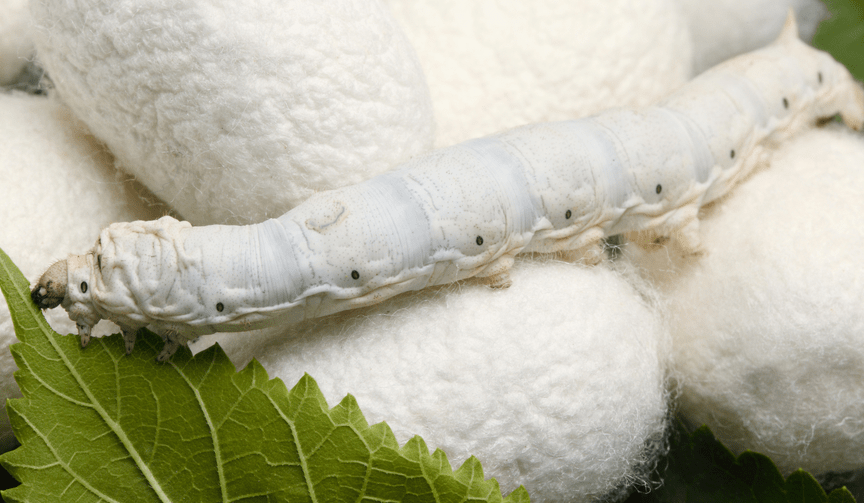
Justinian was the emperor of Constantinople, a crossroads city, and once he put in for mass production of material the secret soon spread throughout Europe.
The trek the monks took, has now come to be known as the Silk Road, and this road was a major breaking point in what is now modern-day trade.
Today North Korea is silk’s biggest producer.
We are recently learning that the silkworm’s benefits go far beyond beautiful cloth.
The caterpillar also produces the chemical best serrapeptase, a substance whose nutrition speaks to severe pain relief of many types including migraine headaches, carpal tunnel syndrome and chronic lower back pain. The wonder worm essence also fights inflammation and performs the very import procedure of plaque removal, hopefully before vein hardening.
Vein plaque removal is really important for those of us, well all of us, that have been going by any diet education administered over the last century.
This plaque and vein hardening processes are thought to be a product of modern diet, possibly modern agriculture chemicals, and or highly processed foods.
Moving forward attention should be given to the new cutting edge best diet ingredients and practices described from the ND Biodiverse Food Study, Panama.
The best serrapeptase operates by breaking down various proteins in the body, which decreases inflammation, pain, and accumulation of mucus. Evidence even suggests that through inherent anti-inflammatory triggers, the caterpillar miracle an anticancer agent also.
Having an active component in nutrition to break down mucus build-up, could prove immensely beneficial for overall performance.
For these reasons, we have looked extensively at the best serrapeptase applications.
Specifically for peak performance time applications serrapeptase has worked very well to maintain a steady flow, open sinuses, keep body pains and pestering down, as well as digest lots of heavy proteins before massive output.
Additionally, we found the continued supplementation of the best serrapeptase during maintenance workout periods safe and more helpful to flow and fluidity.
Again, vein plaque clearing is our main interest in the substance. She is a robust anti-aging and anti-cancer agent.
The amino acid digestive enzyme helps break down heavy proteins like papaya and avocado.
The products and characteristics of the caterpillar which becomes the bombyx mori moth, represent strong connectivity with length and durability.
“A loosely pre-arranged destiny, and what is incredible is how far from the path you can go and still get back to it.” – Robert Downey Jr. in reference to his part as Iron Man after a long drawn out struggle with addiction and incarceration.
Arnhold Ehret, a Godfather of the modern leaf diet and important realizations about bread and dairy in relation to mucus production, said that mucus and inflammation in the body was the cause of all disease. We find that more and more to be true in science today.
In the interest of breaking down all foreign matter in the body, I recommend many employees to my guys and one of them at least a good six-week cycle in the year of the “caterpillar flush.”
For now, let’s check out the best serrapeptase.
SERRAPEPTASE RANKINGS
We have ranked some of the best serrapeptase supplements and products available. All of these products order through Amazon, we simply refer to what works!
-
Doctors Best

Doctors Best High Potency Serrapeptase, Non-GMO, Gluten-Free, Vegan, Supports Healthy Sinuses, 120,000 SPU !!
Over 1200 happy customer ratings.
Several customers reported fertility after blocked tubes and other difficulties with conception. Many customers reported improved breathing, asthma relief with subsequent memory improvement! Several indicated that half a pill per day was good.
2. iSerra

250,000 SPU of Serrapeptase Enzyme. 90 Maximum Strength Capsules.
Up to 12x More Potent Than Other Serrapeptase with Delayed Release Technology
High Potency Non-GMO, Gluten-Free, and Vegan approved synthetic formulation.
Over 350 happy customers.
One customer reported that after his father was diagnosed with pulmonary fibrosis in January of 2017 and diagnosed pulmonary fibrosis free after he made his 1st purchase in February 2017.
Fibrosis is a continuous build-up of scar tissue in the lungs, making it increasingly more difficult for the lungs to expand and take in air.
This product has been a Godsend and truly a lifesaver. His Pulmonologist can not believe the change in his lungs!
3. Serra RX

Enteric Coated Proteolytic Systemic Enzyme, Non-GMO, Gluten-Free, Vegan, Supports Sinus & Lung Health, 90 Veg Capsules
One customer commented that this supplement was good for inflammation and that it effectively reduces osteoarthritis joint pain.
Regarding enteric coating, the maker had this to say: As leaders in enzyme therapy, we have been making and enteric coating our serrapeptase powder long before delayed-release and extended-release capsules were in vogue.
4. Sunergenic

Unlike some other systemic enzyme supplements or digestive enzymes, our Serrapeptase supplement is offered in an easy to swallow vegetable capsules that are enteric-coated. Serrapeptase is often misspelled as “serapeptase,” “serraptase,” serrapeptase,“Serratia Peptidase,” or known as “Serratia.” Try our Serrapeptase Capsules today.
Over 300 happy customer reviews.
5. I Enzymes Pro

These guys have a few products on the market a few ranked here too. This “pro-grade” is newer but with excellent customer feedback across near 500 five star reviews.
6. Mary Ruth’s

Emerging research supports that healthy bodies and minds start with a healthy gut. Serrapeptase supplements can help break down proteins before they can irritate (and possibly leak through) your sensitive intestine walls. These enzymes make tough-to-digest proteins easy for your body to digest.
Check out this mother-daughter team product with 100 happy reviews.
7. Nutra Medix

Founded in 1993, Nutramedix supplies highly bioavailable nutritional supplements to health care professionals and consumers.
8. KlaireLabs

Proteolytic vegetarian enzymes offer broad systemic support, while a bit more expensive this option may be most appealing for vegetarians and Vegan dieters.
This hypoallergenic product features highly purified, stable Serratia peptidase cultured from a bacterial source.
Bromelain (from pineapple) papain (from papaya), and Catalase (bacterial source) help broaden proteolytic actions.
Enteric coating protects enzyme activity against degradation by stomach acid.
Free of the following common allergens: milk/casein, eggs, fish, shellfish, tree nuts, peanuts, wheat, gluten, and soybeans.
It contains no artificial colors, flavors, or preservatives.
Trusted by healthcare practitioners since 1969, Klaire Labs products are developed closely with physicians and are intended to be used as directed by a healthcare practitioner.
9. Best Naturals

Best Naturals offers quite a few cheap effective low dose products for people to start with.
10. SerraEnzyme

Successfully used by doctors across the world, the medium dose affordable tablet with no plastic coating is well made and well tested.
Delayed-release capsules and enteric-coated tablets
Phthalate Free! Phthalates are plasticized coatings on capsules and pills that are used to help regulate the timed release of drugs. They are also used to deliver active ingredients to specific areas in the digestive tract where it is most useful for them to be absorbed.
SERRAPEPTASE BENEFITS
Serratiopeptidase is a ‘super enzyme’ which has a huge list of health benefits. [1] More than keeping sinuses clear there is a lot to say for helping performance here.
Biofilm plaque is eliminated; an effect of the protease Esp secreted by S. epidermidis acting as an anti-biofilm and anti-colonization agent against S. aureus cells living in the same ecological niche. [2]
Significantly lowered the attack strength of three of the four strains of Staph virus. [3]
Increased clinical efficiency and healing in surgical molar removals. [4,a] A silkworm wonder for the wound emerges.
Successful encapsulation of serratiopeptidase, a sensitive proteolytic enzyme, was done into chitosan nanoparticles study. The ionic gelation method that was used in the procedure proved a simple, mild, and reproducible method for the fabrication of such nanoparticles. [5]
The high anti-inflammatory activity has been shown in animal tests. [6,a]
Dentists favor employment after molar removal for pain and inflammation control. [7,a,b]
Modern research findings have revealed that inflammation plays a critical role in promoting cancer, in particular, the tumourigenesis, and a process of tumor formation. In this respect, the agent can be considered and anticancer agent. [8]
Some anecdotal reports suggest it possess anti-atherosclerotic effects also, due to its fibrinolytic and caseinolytic properties. Despite being widely used there are few published studies regarding its efficacy. Thus, evidence regarding its clinical utility is needed. [9,a]
Studies suggest gel products for topical delivery are possible and beneficial. [10]
Relative studies have started to point to possible breast cancer and right now breast engorgement treatments, and the medicine is safe for kids so those who may have the gene in their family could go for this one during allergy season.
Most recommend taking when needed or in a cyclic fashion, but taking regularly all year is also fine. I would recommend as always and in this case, making sure to remember to get as many diverse sources of the enzyme as possible.
SERRAPEPTASE SIDE EFFECTS
This stuff is safe!
One user assessed that the high (SPU 120,000) dose after time was so effective in the removal of biofilm from his stomach, he became ill from having none! He did, however, pass some bad looking material, and feel the wonder worm stuff was doing good. He suggested users may want to start with a 40k SPU dose or doing short cycles allowing the stomach biofilm, which is essential to microbiome health to recover and rebuild.
In milligrams, 10 to 60, although be wary of measurements in this format, as this is not the metric for active enzymes, (SPU is).
SERRAPEPTASE EXPERIENCE
The caterpillar flush (minimum 6 weeks 160,000 SPU daily for adults) has become a regular first recommendation to guys on the team, in the field and loved ones who we care about.
Get rid of the mucus, trust me. This best serrapeptase experience will leave you feeling and breathing better, and it takes some of the aging away.
That is right all this outside stuff is representative of what’s on the inside. Keep the flow going is number and this agent helps do that.
I usually get people on several fruits and vegetables, focusing a lot on food state, bio-culture and ferment that help break down foreign materials and promote regularity.
The food we have been eating all these years is what makes that step one.
I stack this practice with tree medicines, good water consumption, a highly diverse plant diet or meat diet plan.
SERRAPEPTASE FAQ
Q. x0,000 serratiopeptidase units (SPU): What would this be in milligrams?
A. Usually, half of the SPU value is delivered in milligrams. For example, 180,000 SPU would be 90 mg.
Be suspicious of any enzyme formula that lists the milligrams of enzymes present as opposed to the activity level of each enzyme in the formula. The activity level determines the overall effect. Two batches of the same enzyme of equal weight can have wildly different activity levels. The bottom line is that when it comes to enzymes, weight measurements are just not useful and can be downright misleading, as there is no direct relationship between weight and units of activity. In fact, an enzyme can still have a weight even if it has been destroyed and has zero activity. When comparing enzymes, if you want apples-to-apples comparisons between supplements, then you need to compare activity levels.
Q. Can I take serrapeptase with other digestion enhancers?
A. Yes! Keep some extra food on hand. 😉
Q. What is the conscious aspect of this being that it comes from the caterpillar? Such as what about the moth?
A. Great question! The current modern scientific direction has been dissection. I preach almost more than any other thing we need to look at the diverse roles things play in diverse settings. It really is all about diversity. Diverse sources of all targeted elements also.
What I am trying to say is we hope to obtain lab synthetics (which most of the products likely are already, caterpillar derived stuff is rare but certainly think in terms of how much the species has to share and what are the farming possibilities), mix those up with alternatives such as the papaya and pineapple derived enzymes, and this kind of stuff raises the more conscious approach.
Q. This particular information makes it seem as though there could be miracles all around us in the creatures and natural elements? Is this true?
A. Yes it is! Good thinking.
To elaborate, Paracelsus, “the father of toxicology,” said that it is the dose that decides if an element is a toxin or remedy.
Q. What is Serrapeptase?
A. Serrapeptase is an enzyme isolated from bacteria found in silkworms.
Q. What is some of the more traditional use of serrapeptase?
A. Serrapeptase has been used traditionally both in Japan and Europe for suppressing inflammation and pain due to surgery, trauma, and other inflammatory conditions.
Q. What is the history of serrapeptase?
A. Serrapeptase was first identified and isolated by the scientific communities in Japan in the 1960s and then afterward it became a bestselling drug there, later it entered the markets of Europe and North America as a dietary supplement.
Q. What is the mechanism of serrapeptase in our bodies?
A. Serrapeptase functions as an enzyme that breaks down proteins into smaller components called amino acids.
Q. What are some of the other common names given to serrapeptase?
A. Serrapeptase is also known by other names: butterfly extract, Serratiopeptidase, and silkworm enzyme.
Q. Could you elaborate more on serrapeptase’s anti-inflammatory property?
A. In dentistry, serrapeptase has been used during minor surgical procedures to reduce pain and facial swelling. Serrapeptase has been determined to be more effective than ibuprofen and corticosteroids in controlling inflammation. In addition, serrapeptase is also found to be causing the least adverse side effects than the others.
Q. Does serrapeptase relieve pain?
A. Serrapeptase has been demonstrated to inhibit pain-inducing compounds. Clinical studies have found that serrapeptase may provide pain relief for those with certain inflammatory ear, nose, and throat conditions. It may also benefit some minor postoperative dental surgeries.
Q. What does the serrapeptase do to potential infection?
A. Research has found that serrapeptase augments the efficacy of antibiotics in treating Staphylococcus aureus which is a leading cause of healthcare-related infections. In addition, mixing serrapeptase and antibiotics is also effective in treating infections that have become antibiotics-resistant.
Q. How does serrapeptase fight blood clot?
A. Serrapeptase acts by dissolving dead or damaged tissue and fibrin which is a sturdy protein formed in blood clots. Thus, it can be used to dissolve plaque in the arteries or blood clots that may lead to stroke or heart attack.
Q. How does serrapeptase help chronic respiratory illness?
A. Serrapeptase enhances the clearance of mucus and suppresses inflammation in the lungs in those suffering from chronic respiratory diseases.
Q. Why is serrapeptase coated for oral consumption?
A. Dietary supplements containing serrapeptase should be enteric-coated, which forbids stomach acid from dissolving it and allows for release in the intestine.
Q. What is a normal dosage of serrapeptase?
A. The doses used range from 10 mg to 60 mg daily.
Q. How is serrapeptase taken?
A. Serrapeptase should be taken on an empty stomach or at least two hours before eating. One also should avoid eating for about half an hour after taking it.
Q. Could you list some potential adverse reactions to serrapeptase?
A. The following are a list of potential adverse reactions: skin reactions, muscle and joint pain, poor appetite, nausea, stomach pain, cough, blood clotting disturbances.
Q. What is an important contraindication related to serrapeptase?
A. Serrapeptase should never be taken along with blood thinners and aspirin plus other dietary supplements like garlic, fish oil, and turmeric, all of which could augment the risk of bleeding or bruising.
Q. Is there existing data showing the long term safety of using serrapeptase?
A. Currently, there are insufficient data on the long term safety and efficacy of serrapeptase.
Q. What should customers be looking for when purchasing this supplement?
A. Serrapeptase is not regulated hence it is best for customers to restrict purchase to recognized and reputable brands. One should discard any supplement that has expired or shows signs of spoilage.
SERRAPEPTASE RECAP
Break it down and clean it out! Vein plaque, gut stuff, lung build-up, and sinuses!
Keep pain, mucus, and inflammation out of the way.
Bring more length, strength, and durability to life!
Ok man, just give me the best stuff.
RELATED MATERIAL
Additional References
- Aggarwal D., Garg A., Kaur I. P. Development of a topical niosomal preparation of acetazolamide: preparation and evaluation. Journal of Pharmacy and Pharmacology. 2004;56(12):1509–1517. doi: 10.1211/0022357044896
- Nirale N. M., Menon M. D. Topical formulations of serratiopeptidase: development and pharmacodynamic evaluation. Indian Journal of Pharmaceutical Sciences. 2010;72(1):65–67. doi: 10.4103/0250-474X.62246
- Institute of Health. Food Chemical Codex. 5th. Washington, DC, USA: National Academy of Press; 2001
- Grimont PA, Grimont F. Proteinase zymograms of Serratia marcescens as an epidemiological tool. Curr Microbiol 1978;1:15–18
- Bray F, Ferlay J, Soerjomataram I, Siegel RL, Torre LA, Jemal A. Global cancer statistics 2018: GLOBOCAN estimates of incidence and mortality worldwide for 36 cancers in 185 countries. CA Cancer J Clin 2018: 68:394–424
- Kee W, Tan S, Lee V, Salmon Y. The treatment of breast engorgement with Serrapeptase (Danzen): a randomized double-blind controlled trial. Singapore Med J 1989;30:48–54
Media Reference
- Joe Rogan Experience #1411 (Robert Downy Jr. Quote)
OCT 9 2019, Feb 29, 2020

Few plants are as disliked — or as misunderstood — as ragweed. To most people it’s simply the reason late summer means itchy eyes and endless sneezing. But ragweed is also a native North American plant with a genuinely surprising past: it was one of the continent’s ancient cultivated seed crops, and its very name is tangled up with wormwood in a way worth untangling.
What ragweed is (and the wormwood mix-up)
Ragweed is the genus Ambrosia — most commonly Ambrosia artemisiifolia (common ragweed) and Ambrosia trifida (giant ragweed) — in the daisy family. Here’s the confusion we see constantly: common ragweed’s folk names actually include “American wormwood” and “bitterweed,” which is why people so often conflate it with true wormwood. They are not the same plant. True wormwood is Artemisia absinthium; ragweed is Ambrosia. Different genus, different chemistry, different story — even if an old common name blurred the line.
The allergy reality
There’s no sugar-coating ragweed’s headline trait: it is one of the most significant pollen allergens in North America. A single plant can release enormous quantities of lightweight pollen that travels for miles on the wind, and its late-summer-into-fall season is the classic cause of seasonal allergic rhinitis — hay fever. People allergic to ragweed may also react to related plants and, through cross-reactivity, to certain foods like melon and banana in some cases.
The forgotten history: an ancient seed crop
Here’s the part almost no one knows. Long before it was a villain, giant ragweed (Ambrosia trifida) was part of the “Eastern Agricultural Complex” — a group of plants that Indigenous peoples of eastern North America cultivated thousands of years ago. Archaeological evidence shows ragweed seeds among early cultivated foods, valued as an oily, protein-bearing seed before maize came to dominate. It’s a striking reminder that our labels — “weed,” “crop,” “medicine,” “menace” — say as much about us as about the plant.
One plant, four names, and a history that runs from ancient granary to modern nuisance — ragweed is a lesson in how much context decides a plant’s reputation.
From the field — what we’ve seen
Fifteen years of working the land teaches you to read plants the way the old growers did — not as heroes or villains, but as parts of a system. Ragweed is a pioneer: it rushes into bare, disturbed, abused soil, and where you see a lot of it, the ground is often telling you something about how it’s been treated. That ecological literacy — knowing what a plant’s presence means — is field knowledge that rarely makes it into a nutrition table. We document ragweed here for exactly that reason: to know a plant honestly, allergen and ancient food alike, is part of a truly diverse understanding of the living world.
Supporting study & further reading
- Native Plant Trust, Go Botany. “Ambrosia artemisiifolia (common ragweed)” and “Ambrosia trifida (giant ragweed).”
- North Carolina Extension Gardener Plant Toolbox. “Ambrosia artemisiifolia (American Wormwood, Common Ragweed).”
- Smith BD. “The Eastern Agricultural Complex” — archaeological literature on early cultivated seed crops of eastern North America.
Part of the natural-food studies at Nutritional Diversity. Explore the wider system at nutritionaldiversity.com/ecosystem.
Bromelain: Pineapple’s Powerful Enzyme
Bromelain is a group of enzymes found in the stem and fruit of the pineapple (Ananas comosus). More than a tropical treat, pineapple carries one of nature’s most studied digestive enzymes.
Nutritional & Phytochemical Profile
Bromelain is a proteolytic enzyme, meaning it helps break down proteins. It is concentrated in the pineapple core and stem and is often extracted for use on its own, alongside the fruit’s vitamin C and manganese.
Traditional & Modern Uses
Traditionally, pineapple has been eaten to aid digestion after protein-rich meals. Bromelain is now widely used to support digestion, a healthy inflammatory response, and post-exercise recovery as part of a balanced routine.
How to Use & Enjoy
Fresh, ripe pineapple — especially closer to the core — provides natural bromelain; note that cooking deactivates the enzyme, so raw fruit is best. Concentrated bromelain is also available in supplement form.
The Nutritional Diversity Perspective
Bromelain highlights the role of food enzymes in nutrition — an often-overlooked dimension of dietary diversity that whole, raw foods uniquely provide.
These statements have not been evaluated by the Food and Drug Administration. This content is for general educational purposes and is not medical advice. Consult a qualified healthcare provider before use, especially if pregnant, nursing, taking medication, or managing a health condition.
Yohimbe: The Potent West African Bark
Yohimbe (Pausinystalia johimbe) is an evergreen tree native to Central and West Africa whose bark has a long history of traditional use. It is one of the more potent botanicals and deserves respectful, informed use.
Nutritional & Phytochemical Profile
Yohimbe bark contains the alkaloid yohimbine along with related compounds. Because these alkaloids are pharmacologically active, yohimbe is far more potent than most culinary botanicals, and its content can vary widely between products.
Traditional & Modern Uses
Traditionally, yohimbe bark has been used in West African practice as a stimulant and tonic. Modern use should be cautious: yohimbe can raise heart rate and blood pressure and is not suitable for everyone — particularly those with cardiovascular conditions, high blood pressure, anxiety, or who are pregnant or nursing.
How to Use & Enjoy
Because of its potency and variability, yohimbe should only be used under the guidance of a knowledgeable healthcare provider who can advise on whether it is appropriate and at what dose. It is not a casual daily botanical.
The Nutritional Diversity Perspective
Yohimbe is included here for education and completeness. It is a clear reminder that “natural” does not mean “gentle” — some botanicals are powerful and call for informed, careful respect.
These statements have not been evaluated by the Food and Drug Administration. This content is for general educational purposes and is not medical advice. Consult a qualified healthcare provider before use, especially if pregnant, nursing, taking medication, or managing a health condition.
-

 Agriculture6 months ago
Why Small Alternative Tropical Agriculture is the Best Investment Today
-
 Special Elements3 months ago
Garlic Vine (Ajos Sacha / Mansoa alliacea): The Amazon’s Garlic-Scented Plant
-
 Special Elements6 months ago
Best Pre-Workout Supplement Rankings, Benefits, Side Effects & Experience
-
 Special Elements4 months ago
Cassava (Manioc): Nutrition, Energy & Safe Preparation
-
 Special Elements6 months ago
Best Glutamine Rankings, Benefits, Side Effects & Experience
-
 Special Elements4 months ago
Wormwood (Artemisia absinthium): The Bitter Herb — Traditional Uses & Real Cautions
-
 Special Elements4 months ago
Culantro (Eryngium foetidum): The Bold Tropical Cousin of Cilantro
-
 Special Elements3 months ago
Jackfruit: Nutrition, Fiber & the Tropical Meat Alternative